MANGAN–Economics-Political Science–2021: Madonna’s Like a Virgin and La Traviata
I chose to pair the “E strano…e forse lui…Sempre libera” aria from La Traviata with Madonna’s Like a Virgin. The conceptual parallels are quite obvious: Both provoke debates about female sensuality, intimacy and representation in art. In form, I found the parallels quite interesting, as well. In essence, the music video and the aria give both women the means to engage directly with the public and voice their own narratives. In both cases, we have women asserting their own artistic subjectivity via song. There is a sense of reclamation as well as reconciliation in both where Madonna and Violetta are asserting their sexualities while also trying to weigh their sexualities with normative expectations of female purity. Finally, they both problematize the male gaze’s depiction of womanhood in the arts.
Zoe Lin – English – 2022
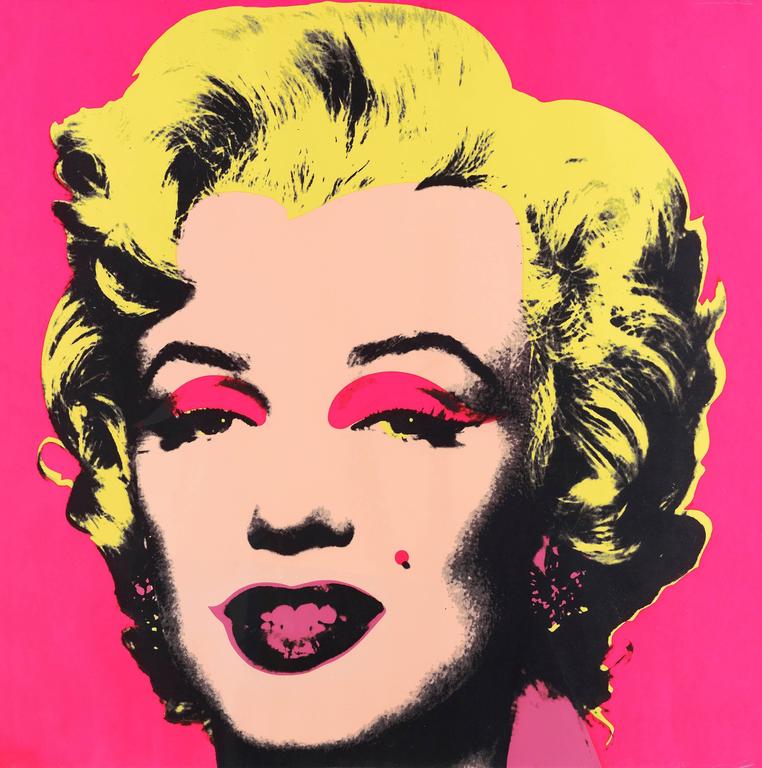
I paired Bach’s C minor fugue from The Well-Tempered Clavier with Andy Warhol’s 1967 “Marilyn Monroe”. As I listened to the Bach, the repetition of the fugue’s subject took on an obsessive quality. I found myself listening for it and feeling rather relieved when I heard it. In a similar way, Andy Warhol’s work plays on the idea of repetition in capitalism with turning Marilyn Monroe into a recognized, branded icon, her personhood removed with the work’s performative feeling, self-awareness, and flashiness so that we feel a sort of comfort in seeing what we recognize only as an ideal.
Tina Shen- Film & Economics -2020
I paired Handel’s Hallelujah Chorus with a Carlton Draught commercial because both pieces use a form of theatrical expression to deliver its message to the audience. With the sheer number of people involved in the two pieces, both Handel and Carlton Draught create an awe-inspiring spectacle that draw the audience into its narrative. The two-minute commercial costs about $9 million which also inevitably reminds us of the lavish architectural style during the Baroque period.
Stewart Newblatt—American Studies—2022
I have paired Monteverdi’s L’Orfeo (1607) to a Tom and Jerry clip. Although I can see why some find this pairing somewhat strange, I believe there are multiple comparisons between the two. Firstly, Monteeverdi’s instrumental prologue is what sparked this thought, as the overall speed and chaotic feel produced by the instruments reminded me of a chase. Also, within Monteverdi’s work one can feel the relationship between the singer and the orchestra. This relationship seems to consist of two forces competing against one another, and in the process creating a unique form of art. In this way Tom and Jerry also compete constantly against one another, while creating a different type of art.
Isaac Midgen—History—2020
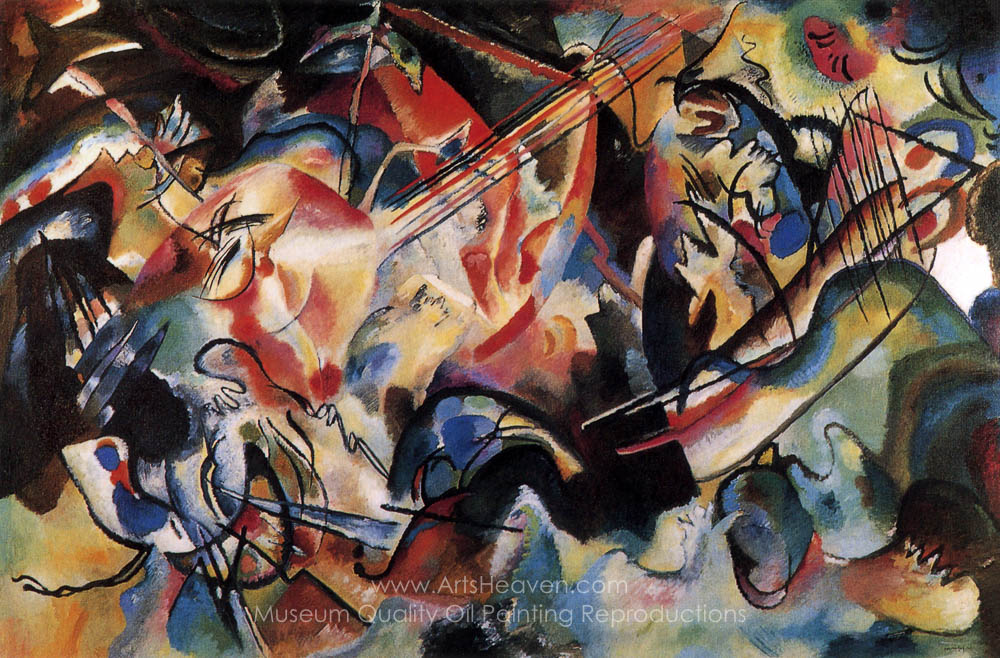
I have paired Monteverdi’s Ah, dolente partita! (1603) to Kandinsky’s Composition VI (1913), as both seem to freely flow in creating a picture of what the artist is trying to communicate. As a madrigal, Monteverdi uses the music, its notes and movement, to enhance the poetry. In this song, the lyrics focus on death. However, despite this supposedly macabre theme, both the music and subtleties of the text speak to a regenerative aspect of dying. Thus, although there are many dissonances, the music seems to ascend in places where the text speaks of the “feeling” and “liveliness” of death. This reminds me of Composition VI, which seems both gloomy and light, as Kandinsky sought to evoke a flood/destruction, as well as a rebirth/baptism. As the story goes, Kandisnky focused on the sound of the word “flood” rather than its meaning to paint this piece. In this way, the chaotic colors and wave-like strokes confuse the viewer who feels overwhelmed, just as if he/she was in a flood, yet the locales of light and hints at formal representation provide an optimistic direction.
Clark Johnson—Political Science—2022

I have paired “O Rubor Sanguinis” by Hildegard Von Bingen with a photograph taken by award winning Photographer Jeff J Mitchell inside a Syrian refugee camp in Za’atari, Jordan in 2013. The image shows six small Syrian children happily posing for the the photographer, flashing smiles and peace signs. “O Rubor Sanguinis” –which translates to “O Ruby Blood” — is an allusion to Jesus, “The Prince Of Peace.” “O Rubor Sanguinis” conveys to me a certain sense of calm, serenity, and hope. Conversely, its opening melismatic climb gives me the impression that it is an appeal of sorts to some higher, divine authority out of despair. The image is a depiction of war, one of life’s true horrors. Yet these children, though not unaffected, are still hopeful, innocent, and pure. In that way, this image captures the childlike state Hildegard believed could be delivered through music. But it also captures a world in desperate need of mercy and peace.
 Music Humanities Section 10 Class Website, Spring 2020